
Yuru Camp△ Real Locations in Yamanashi (2026): Motosu, Minobu & More
Yuru Camp△ is set around Minobu in southern Yamanashi: visit Lake Motosu's Koan Campsite and the Nakanokura Pass banknote view from episode 1, the closed school behind Motosu High School and the Minobu Line towns. Koan and Fumotoppara (in Shizuoka) are booking-only campsites, and the school grounds open only on event days — checked 2026-10-03.
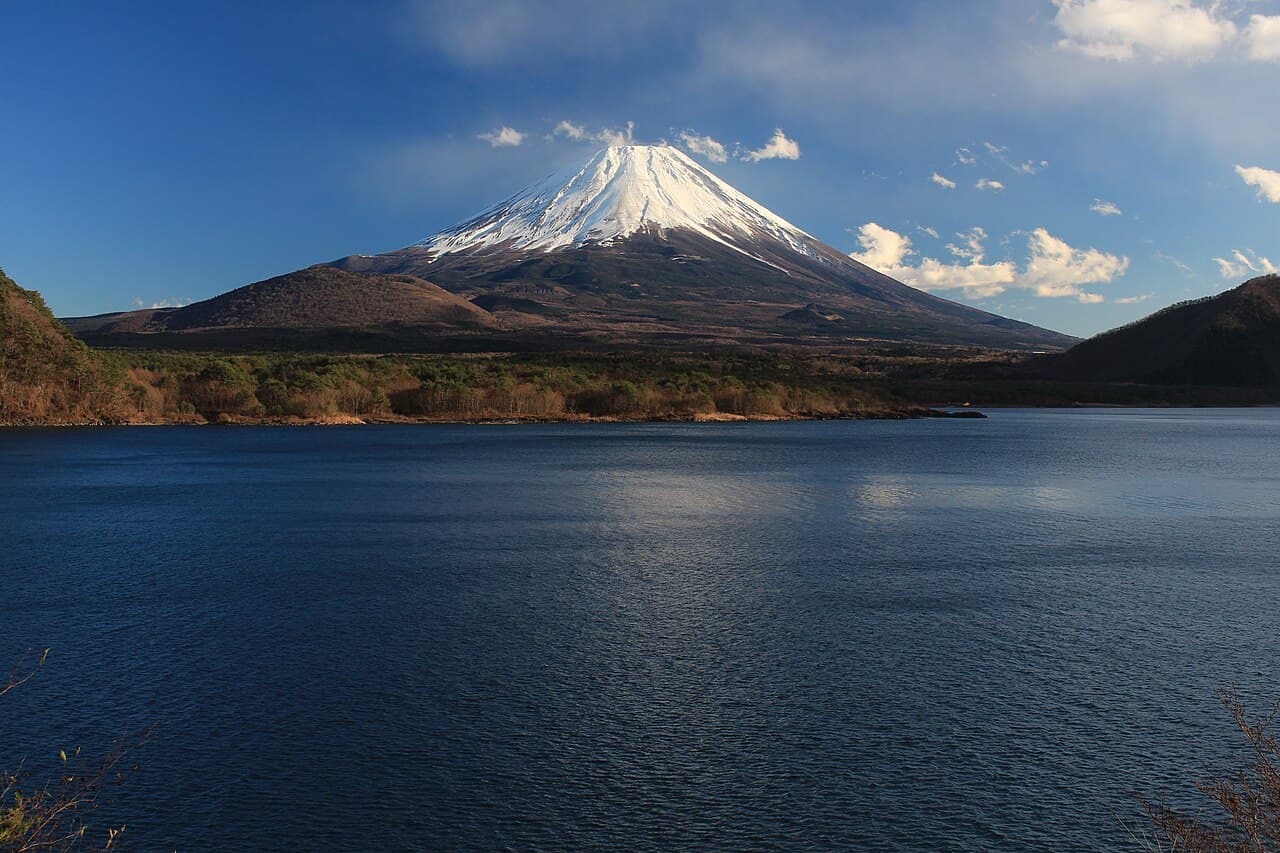
Yuru Camp△ (Laid-Back Camp) is set around Minobu in southern Yamanashi, and the places a visiting fan can actually reach are Lake Motosu's Koan Campsite and the Nakanokura Pass "1,000-yen-note" view from episode 1, the closed school that was the model for Motosu High School, and the JR Minobu Line towns — with Fumotoppara just across the border in Shizuoka.
Two things decide the trip. First, Koan and Fumotoppara are working campsites that run on reservations: to sit by the water where Rin pitched her tent, book a day camp. Second, the real Motosu High School is a closed school whose grounds open only on event days, so you see it from the road. Without a car, Lake Motosu is about an hour by Fujikyu bus from Kawaguchiko Station, and the Minobu spots are on the JR Minobu Line. Everything below was checked on 2026-10-03 against the Yamanashi Tourism Organization, the campsites' own sites, Fujikyu Bus and the Bank of Japan.
The official map comes first
The Yamanashi Tourism Organization (the prefecture's tourism body) publishes a free Yuru Camp△ model-location map covering the TV series, the Heya Camp△ shorts, Season 2, the film and Season 3: 101 numbered spots, each labelled with the name used in the anime. Download the PDF from its special page; the page lists one shop in Minobu, Minobu-san Bushuya, handing out paper copies (one per person, while they last). The map carries the warning that matters most: some model locations restrict entry, so follow the local rules. A fourth TV season now has its own official site.
The scenes and where they are
Episode 1, Lake Motosu. Nadeshiko, newly moved from Shizuoka, cycles to Lake Motosu to see "the Mt. Fuji on the 1,000-yen note", falls asleep and wakes after dark; Rin, solo-camping by the lake, helps her, and the two share curry noodles. Rin's ride climbs Route 300 (the Motosu-michi) through the Nakanokura Tunnel to Koan Campsite on the north shore. Fuji is hidden by cloud when Rin arrives — a realistic preview of your own visit. Nadeshiko dozes on the bench outside the public toilet just before the campsite, and the trail to the banknote view starts beside that toilet.
Episodes 1–3 and 8, school and commute. The girls' Motosu High School is modelled on the former Shimobe elementary and junior high school in Tokiwa, Minobu. Nadeshiko cycles over the Nanbu Bridge to JR Utsubuna Station; the club walks to JR Kai-Tokiwa Station, about 600 m from the school.
Episodes 2–3, Fumotoppara. Rin's second solo camp, and Nadeshiko's hot-pot visit, happen at Fumotoppara in Fujinomiya, Shizuoka. On the way home Nadeshiko stops at the Asagiri Kogen roadside station.
Episodes 4–5, the club's first camp. The trip starts at JR Yamanashishi Station, crosses the Nezu Bridge and passes Fuefukigawa Fruit Park (called "Fuefuki Park" in the show) and Hottarakashi Onsen ("Hottokeya Onsen").
Episodes 6–7, Lake Shibireko. Nadeshiko and Rin's yakiniku (barbecue) camp is at the small mountain lake of Shibireko in Ichikawamisato, modelled on the Suimeiso campsite.
Episode 8, Minobu town. After exams the club gets off at JR Minobu Station, walks the white-walled Shonin-dori street and binges on Minobu manju from Eishodo. The outdoor shop they visit does not exist in Minobu.
Episodes 11–12. The Christmas camp is modelled on Fuji YMCA Global Eco Village in Fujinomiya, Shizuoka, and the season closes with Nadeshiko back at Koan for a spring solo camp. Season 3 adds spots in the north of the prefecture, such as the Mizugaki-yama campsite in Hokuto.
Spot table
| Spot | Scene | Area | Getting there | Know this |
|---|---|---|---|---|
| Koan Campsite, Lake Motosu | Ep 1 (Rin meets Nadeshiko), Ep 12 | 2926 Nakanokura, Minobu | Fujikyu "Blue Line" bus from Kawaguchiko Station to the Motosuko stop, then Koan's pick-up; about 30 min by car from Kawaguchiko IC | Reservation only; day camp until 17:00 |
| Nakanokura Pass viewpoint | The "1,000-yen-note Fuji" Nadeshiko came for | Above the north-west shore, Minobu | Trail from beside the paid public toilet: 620 m, about 20–30 minutes uphill | An observation deck, not the lakeside |
| Former Shimobe elementary and junior high school (Motosu High School) | The girls' school | 1495 Tokiwa, Minobu | About 600 m (under 10 minutes) on foot from JR Kai-Tokiwa Station | Grounds closed except on event days |
| JR Utsubuna Station and Nanbu Bridge | Nadeshiko's commute (Ep 1) | Nanbu | JR Minobu Line; limited express Fujikawa trains stop at Utsubuna | The bridge crosses the Fuji River |
| JR Minobu Station, Shonin-dori, Eishodo | After-school trip and manju (Ep 8) | Tsunouchi, Minobu | JR Minobu Line | Drivers must use car parks, not the street |
| Kuonji temple and the Mt. Minobu Ropeway | Listed model locations; the ropeway appears in manga volume 5 | 3567 Minobu | Bus from JR Minobu Station, about 15 minutes to the terminus | Head temple of the Nichiren school — a place of worship |
| Fuefukigawa Fruit Park | "Fuefuki Park" (Eps 4–5) | 1488 Esohara, Yamanashi City | About 3 km, just under an hour on foot from JR Yamanashishi Station | Night view over the Kofu Basin |
| Fumotoppara (Shizuoka) | Rin's solo camp, the hot pot (Eps 2–3) | 156 Fumoto, Fujinomiya | The campsite recommends coming by car | Online reservation only; no entry after 17:00 |
Getting there
- Lake Motosu without a car. Fujikyu's Narusawa–Shojiko–Motosuko sightseeing bus (Blue Line) takes 57 minutes from Kawaguchiko Station to the Motosuko stop. The timetable we checked has five departures, 9:35 to 15:35, and the last bus back leaves the Motosuko tourist information centre at 16:45. A Kawaguchiko–Saiko–Motosuko 1 Day Pass costs ¥1,500 per adult, a 2 Day Pass ¥2,000. Koan runs a pick-up from the Motosuko stop: call on arrival, 9:00–16:30 (it says 10–30 minutes). On weekends and holidays a Minobu town bus links Hadakajima, Shimobe-Onsen and Kai-Tokiwa stations with the campsite.
- From Tokyo. Reach Kawaguchiko Station for Lake Motosu, or Kofu for the JR Minobu Line, which runs south from Kofu to Fuji Station in Shizuoka.
- From Osaka or Nagoya. Koan's own access page routes you via Shin-Fuji Station on the Tokaido Shinkansen and a Fujikyu bus to the Motosuko stop; for Minobu, take the Minobu Line north from Fuji.
- By car. Koan gives about 25 minutes from Kawaguchiko IC via Route 139; the lake has free parking by the shore. From December to mid-April the roads and campsite freeze, winter tyres are needed, and Koan may close at short notice for snow.
Know before you go
- Koan is booking-only. Reception is at Koan Central Lodge (7:30–20:00); the gate is shut to cars from 20:00 to 8:00, and you cannot arrive before your booked check-in or wait nearby. A weekday day camp is ¥500 per adult (¥300 per child) plus a tent or space fee and ¥600 parking; weekends and holidays cost more (as of 2026-10-03). Non-campers may rent a boat, SUP or canoe for up to two hours. Swimming and drones are banned, there are no bins, and the nearest supermarket is 25 km away.
- Fumotoppara is in Shizuoka, not Yamanashi. Bookings are online only (overnight, or a day camp until 17:00), it does not take same-day arrivals when full, and nobody checks in, out or re-enters after 17:00. Fuji is visible from every pitch. At 830 m, mornings and evenings are cold even in summer.
- The 1,000-yen note changed. The Bank of Japan lists two current 1,000-yen designs: the Noguchi Hideyo note from 2004, with Mt. Fuji and cherry blossoms on the back, and the Kitasato Shibasaburo note from 3 July 2024, with Hokusai's Great Wave. The Motosu view is on the older note: the prefecture credits Okada Koyo's 1935 photograph from Nakanokura Pass. Bring a Noguchi note if you want the comparison shot.
- Lake Shibireko is private land. The prefecture's Season 1 page warns that everything from the car park to the shore belongs to the campsite and that parking must be paid.
Be a good pilgrim
- The Motosu High School model is a closed school: stay outside unless an event is on. Kinryuzan Jokoin, a temple in the same Tokiwa district, opens its car park and toilets to pilgrims — park there and keep your voice down.
- Campsites are someone's holiday. For the club's first campsite, the prefecture's Season 1 page asks visitors to book before going and to get the manager's permission before taking photos — a fair rule for every campsite on the map.
- Kuonji is a working head temple; treat it as a place of worship first.
- Take your rubbish home. Koan asks campers not to use motorway service-area or convenience-store bins, or the roadside.
Photo tips
- The banknote angle is shot from the Nakanokura Pass deck, not from the lakeside; allow 40–60 minutes for the walk up and back.
- Lake Motosu's autumn colours, the backdrop of Rin's episode-1 ride, peak from late October to mid-November; Kuonji's weeping cherry, said to be 400 years old, blooms from late March to early April (the prefecture's figures).
Nearby otaku extras
Pair Yuru Camp with Aqours' hometown in Love Live! Sunshine!! Numazu and Uchiura or Evangelion's Hakone. More short spot guides: the Slam Dunk railway crossing and the Your Name stairs.
Sources
- Yamanashi Tourism Organization: Yuru Camp△ series model-location map, Area 3 list, map PDF, all series, Season 1 episode pages, e.g. episode 1, Lake Motosu, Koan Campsite, Nakanokura Pass viewpoint, Kuonji
- Koan (kouan-motosuko.com): home, campsite and fees, FAQ, access
- Fumotoppara: home, facilities, reservations, FAQ
- Fujikyu Bus: sightseeing buses and passes
- Bank of Japan: banknotes currently issued
- Yuru Camp△ anime portal
Checked on 2026-10-03 against the pages above. Bus times, campsite fees and opening rules change; confirm on the official pages before you travel.
FAQ
- Where is the real Motosu High School from Yuru Camp?
- It is modelled on the former Shimobe elementary and junior high school at 1495 Tokiwa, Minobu, Yamanashi, about 600 m (under 10 minutes on foot) from JR Kai-Tokiwa Station on the Minobu Line. The school is closed and the grounds open only during events, so view it from outside. Kinryuzan Jokoin temple in the same district opens its car park and toilets to pilgrims (Yamanashi Tourism Organization, checked 2026-10-03).
- Can I visit Koan Campsite at Lake Motosu without staying overnight?
- Yes, by booking a day camp: the campsite is reservation-only and day campers leave by 17:00. On weekdays a day camp costs ¥500 per adult plus a tent or space fee and ¥600 parking; weekends and holidays cost more. Non-campers may also rent a boat, SUP or canoe for up to two hours (Koan official site, checked 2026-10-03).
- Where is the Mt. Fuji view from the 1,000-yen note?
- At the Nakanokura Pass observation deck above the north-west shore of Lake Motosu. The trail starts beside the paid public toilet near Koan Campsite and is 620 m, about 20–30 minutes uphill. The view is on the Noguchi Hideyo 1,000-yen note issued from 2004; the Kitasato Shibasaburo note issued from 3 July 2024 shows Hokusai's Great Wave instead (Yamanashi Tourism Organization and Bank of Japan, checked 2026-10-03).
- How do I get to Lake Motosu without a car?
- Take Fujikyu's Narusawa–Shojiko–Motosuko sightseeing bus (Blue Line) from Kawaguchiko Station: 57 minutes to the Motosuko stop, five departures a day on the timetable checked 2026-10-03, last bus back 16:45 from the Motosuko tourist information centre. A 1 Day Pass costs ¥1,500 per adult. Koan offers a pick-up from the Motosuko stop (call on arrival, 9:00–16:30), and on weekends and holidays a Minobu town bus runs from Minobu Line stations to the campsite.
- Is Fumotoppara in Yamanashi, and can I just drop in?
- No and no. Fumotoppara, where Rin solo-camps in episodes 2–3, is at 156 Fumoto, Fujinomiya, in Shizuoka Prefecture. It takes online reservations only, for overnight stays or a day camp until 17:00, accepts no same-day arrivals when full and allows no check-in or re-entry after 17:00 (Fumotoppara official site, checked 2026-10-03).
- Is there an official Yuru Camp pilgrimage map?
- Yes. The Yamanashi Tourism Organization publishes a free map of 101 numbered spots from the TV series, Heya Camp, Season 2, the film and Season 3, downloadable as a PDF from its Yuru Camp special page. The page lists Minobu-san Bushuya in Minobu as handing out paper copies, one per person while they last (checked 2026-10-03).


