Cosplay Rules in Japan for Visitors: Where You Can Change, Wear and Photograph
The rule that surprises everyone: you cannot travel to an event in costume. Japanese events run on change-on-site, designated changing rooms only, no toilets, and photography strictly by individual consent.
The one rule that catches every visitor
In most countries, wearing your costume on the train to a convention is part of the fun. In Japan it is prohibited. Comic Market states it directly: coming to or going from the venue in cosplay — from your home, your hotel, anywhere — is not allowed, and you may be denied entry if you arrive in costume. The reasoning given is straightforward: Japanese society generally does not accept people in costume in public space.
So the model is: travel in normal clothes, carry the costume, change on site, change back before you leave. Build that into your timing, because it is not a small overhead — it means arriving earlier and leaving later than you'd plan at home.
Where you change
Events run designated changing rooms, and using them is not optional:
- Changing or doing makeup in the toilets is strictly prohibited. This is one of the most consistently enforced rules at Japanese events, and it exists because toilet queues at an event with tens of thousands of attendees are already a safety problem.
- Changing rooms usually charge a registration fee — at Comic Market it is ¥500 for your first entry each day, and you receive a registration leaflet (the colour changes by day) that doubles as a re-entry pass.
- There is a last entry time. At Comic Market, the last entry to change into costume is 15:30, with the changing room open 10:30–17:30 (to 17:00 on Day 1). Turn up at 16:00 with a costume in your bag and you simply won't be cosplaying that day.
- Some events sell a paid early changing-room ticket by lottery — at Comic Market 108 this was ¥3,000 plus a system fee, giving changing-room access from 08:00 or 09:30 with hall entry from around 11:00.
- One child up to 9th grade can enter the changing room free with one paying adult.
What you can and cannot wear
Japanese event costume rules are more specific than most visitors expect. Using Comic Market's published rules as the reference standard:
- No costumes without underwear. Breast petals or silicone pads are accepted alternatives.
- No visible underwear, whether directly or through see-through material.
- Exposure limits are quantified — no more than one third breast exposure.
- No costumes that could be mistaken for professionals with special authority — police, firefighters, security. This is a legal-risk rule, not a taste rule, and it is worth taking seriously.
- No guns, knives or swords forbidden by law, including realistic replicas. A convincing replica is treated as the thing it resembles.
- Large props must be disassembled while you move around — the threshold at Comic Market is taller than 2m or wider than 1m.
Other events publish their own variants of these rules. The numbers move; the structure doesn't. Always read the specific event's cosplay page for the edition you're attending.
Photography
You must get individual permission from each cosplayer before taking any photo, and they may say no. This is the rule at Comic Market, and it reflects the norm across Japanese events generally. Practical implications:
- Ask each person, each time. Permission for one photo is not permission for a series.
- A cosplayer posing for someone else has not given you permission.
- Refusal is normal and carries no offence in either direction.
- Many venues also designate specific photography areas, and shooting outside them may be restricted even with the subject's consent.
The same consent-first logic governs photography in commercial otaku spaces, where the rules are often stricter still — maid cafés in particular run a paid-photo model with staff photography otherwise prohibited. See maid café photo rules and maid café etiquette.
Cosplay outside events
Street cosplay is not a general right in Japan. Outside an event venue or a designated area, assume you need the property owner's permission — shopping streets, station concourses, temple grounds and private buildings all have their own rules, and "it's a tourist area" is not permission. Anime pilgrimage locations are frequently ordinary residential neighbourhoods where residents live; our pilgrimage guide covers the etiquette that keeps those places open to fans.
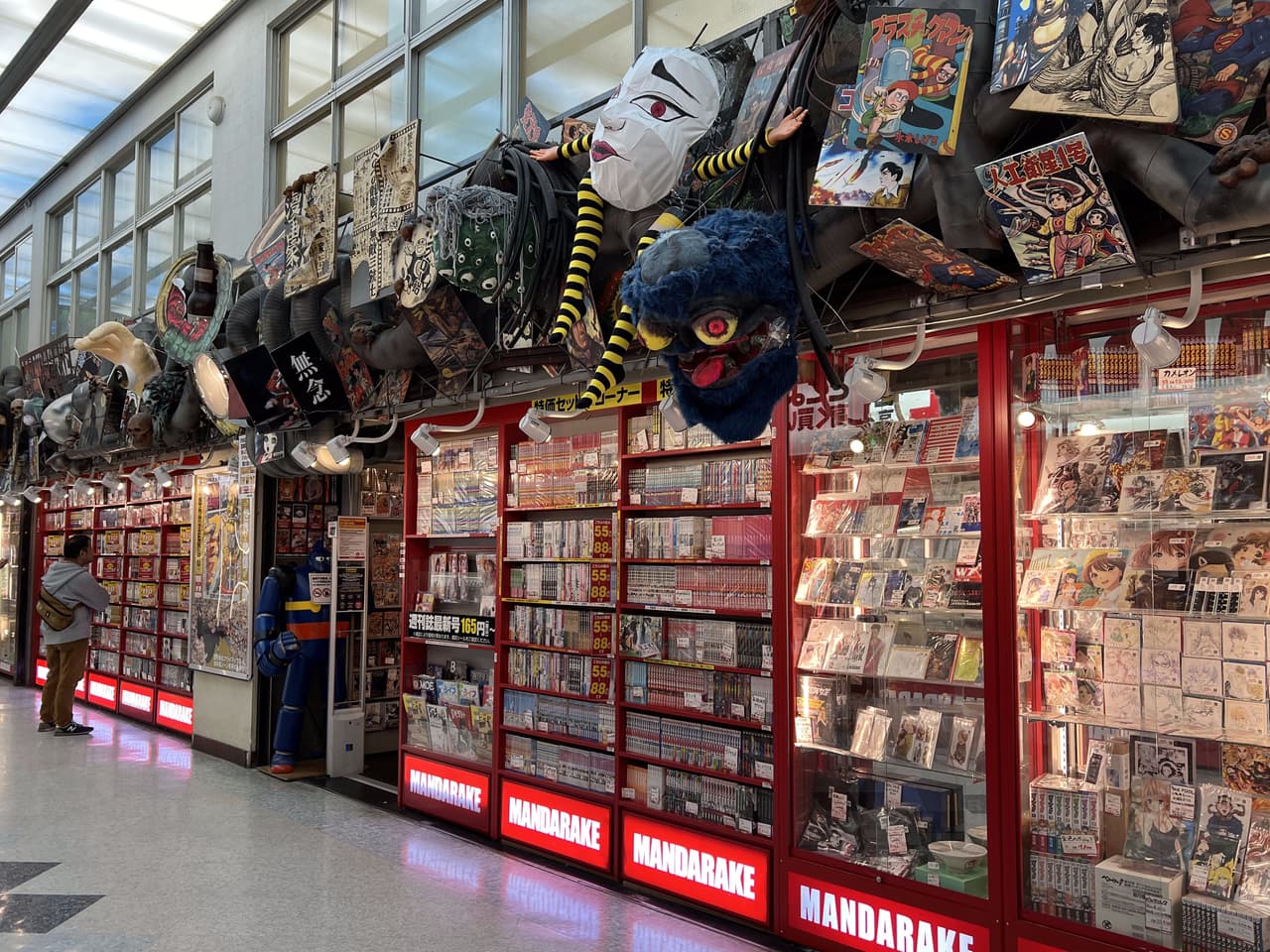
Where to buy costume items and wigs: several secondhand chains carry cosplay stock, including Mandarake Nakano, which runs a dedicated cosplay shop among its Nakano Broadway branches, and Mandarake LaLaLa Ikebukuro.
If you're attending Comiket specifically
The cosplay rules sit inside a wider set of event rules — the wristband admission system, the overnight-queueing ban, cash-only circles. Those are covered in the Comiket survival guide.
Fees, times and costume limits above are Comic Market 108's published rules, as of August 2026, used here as the reference standard. Other events publish their own variants and the numbers move — always read the cosplay page for the specific event and edition you are attending.
Preguntas frecuentes
- Can I wear my cosplay on the train to a Japanese convention?
- No. Comic Market prohibits arriving at or leaving the venue in costume, from your home, hotel or anywhere else, and you may be denied entry if you turn up in cosplay. The stated reason is that Japanese society generally does not accept costume in public space. Travel in normal clothes, carry the costume, and change at the venue — then change back before you leave.
- Where am I allowed to change into cosplay at a Japanese event?
- Only in the event's designated changing room. Changing or doing makeup in the toilets is strictly prohibited. At Comic Market the changing room charges a ¥500 registration fee for your first entry each day and issues a leaflet that works as a re-entry pass; it runs 10:30–17:30 (to 17:00 on Day 1), and the last entry to change into costume is 15:30.
- What costumes are banned at Japanese anime events?
- Using Comic Market's published rules as the standard: no costumes without underwear (breast petals or silicone pads are accepted), no visible underwear including through see-through material, no more than one third breast exposure, and nothing that could be mistaken for police, firefighters or security. Guns, knives and swords forbidden by law are banned including realistic replicas, and props taller than 2m or wider than 1m must be disassembled while you move around.
- Do I need permission to photograph a cosplayer in Japan?
- Yes, individually and every time. You must get permission from each cosplayer before taking any photo, and they are entitled to refuse. Permission for one shot is not permission for a series, and someone posing for another photographer has not given you permission. Many venues also restrict photography to designated areas even when the subject consents.
- Can I cosplay in the street in Japan?
- Not as a general right. Outside an event venue or a designated cosplay area, assume you need the permission of whoever manages the space — shopping streets, station concourses, temple grounds and private buildings all set their own rules, and being in a tourist area is not permission. This matters especially at anime pilgrimage sites, which are often ordinary residential neighbourhoods.